
Your Garage Door Is the Easiest Way Into Your Home — Here’s How to Stop Burglars
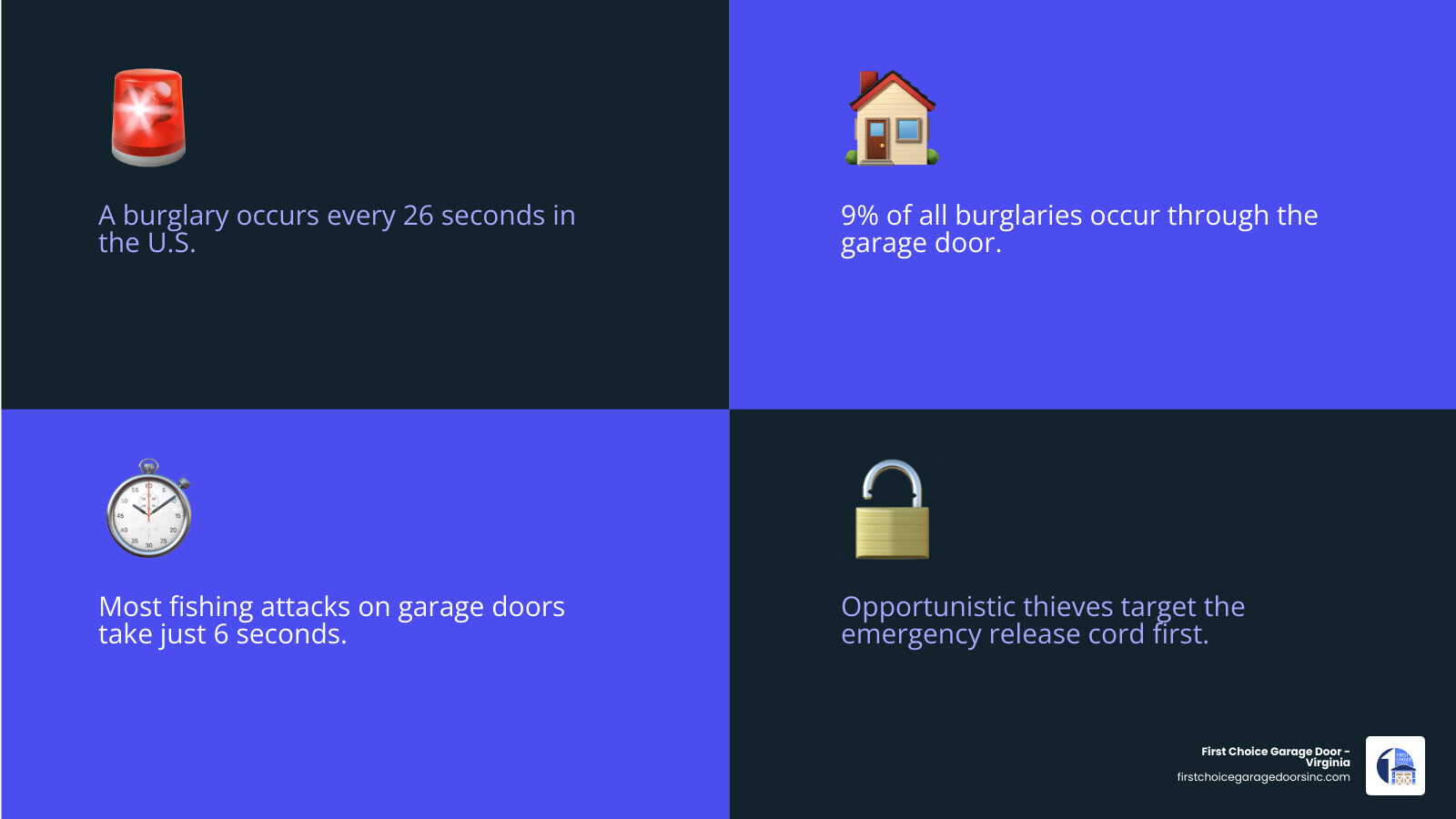
Knowing how to prevent garage door break ins could be the difference between a secure home and becoming one of the 1.5 million burglary victims in the U.S. each year. According to FBI data, a break-in happens roughly every 26 seconds — and about 9% of those entries come through the garage.
Here’s a quick answer if you need it fast:
How to prevent garage door break-ins:
- Protect the emergency release — use a zip-tie or garage shield to block the “fishing” attack
- Add physical locks — install slide bolts or track locks as a backup
- Upgrade your opener — replace any pre-1993 fixed-code model with a rolling-code or smart opener
- Secure the interior door — treat the door from your garage to your house like a front door (solid core, deadbolt, reinforced strike plate)
- Use smart features — enable auto-close timers, real-time alerts, and vacation mode
- Remove the remote from your car — use a keychain remote or smartphone app instead
- Add motion-activated lighting — install lights 10–12 feet above ground near all entry points
- Cover garage windows — use frosted film or blinds so thieves can’t see inside
Most burglars are opportunists. They’re not planning elaborate heists — they’re looking for the easiest target on the street. A garage door that takes more than a few seconds to defeat is usually enough to make them move on.
The problem is that most homeowners spend money securing their front door while leaving the garage — the largest moving entry point on the entire house — protected by little more than an aging opener and a thin wire cord.
This guide covers every layer of garage door security, from the most common break-in method (the six-second fishing attack) to smart technology upgrades, physical locks, and the interior door most people completely overlook.
Stopping the “Six-Second” Fishing Attack
The most notorious vulnerability in residential garages is the “fishing” attack. This exploit targets the emergency release mechanism—the red cord you pull to open the door manually during a power outage.
A thief can use a door wedge or simply push in the top of the door to create a small gap. They then slide a pre-bent wire coat hanger through the gap, hook the emergency release lever, and pull. This disconnects the door from the opener, allowing the intruder to lift the door by hand and walk right in. It takes as little as six seconds and leaves virtually no sign of forced entry.
To prevent garage door break-ins like a pro, you must secure this lever. Here are the most effective ways to do it:
- The Zip-Tie Method: Thread a light-duty zip-tie through the hole in the release lever and around the carriage assembly. This prevents a coat hanger from pulling the lever down. In a real emergency, a strong tug from inside the garage will break the tie, maintaining your safety.
- Garage Shields: You can install a plastic or metal “shield” that blocks access to the lever from the outside while leaving the cord accessible from the inside.
- Cord Shortening: Many homeowners choose to remove the red handle or shorten the cord so it doesn’t hang low enough to be easily hooked.
When modifying this system, the release is a safety feature required for fire escapes. Never completely disable it or use heavy-duty wire that you cannot break in an emergency. Teaching children about garage door safety is also vital so they know how to use the release correctly if they ever need to.
How to prevent garage door break ins with physical reinforcements
Even if a burglar defeats your opener, physical locks can stop them in their tracks. We often recommend these as a secondary line of defense:
- Slide Bolts: These are installed on the inside of the door and slide into the vertical tracks. They are incredibly effective but must be disengaged before you run the opener, or you risk burning out the motor.
- Track Locks: Similar to slide bolts, these attach directly to the track to prevent the rollers from moving upward.
- C-Clamps: If you are leaving your Manassas home for an extended period, a simple C-clamp tightened onto the track just above one of the rollers is a low-tech, high-security solution.
- Padlocks: Some tracks have pre-drilled holes specifically for padlocks.
Using 4 garage security tips like these ensures that even if a thief “fishes” your release cord, the door won’t budge.
Upgrading Technology to Prevent Garage Door Break-Ins
If your garage door opener was manufactured before 1993, it is a massive security risk. These older models use “fixed codes” set by dip switches. A tech-savvy thief can use a “code grabber” to intercept your signal and replicate it, giving them permanent access to your home.
Modern openers use the secret science of rolling code security. With rolling code technology, the opener and remote generate a new, encrypted code from billions of possibilities every single time the button is pressed. This makes signal interception virtually impossible.
| Feature | Fixed-Code (Pre-1993) | Rolling-Code (Modern) |
|---|---|---|
| Security Level | Low (Easily Hacked) | High (Encrypted) |
| Code Variety | One static code | Billions of combinations |
| Vulnerability | Code grabbing devices | Virtually immune to grabbing |
| Smart Integration | None | Wi-Fi & App compatible |
Beyond encryption, smart opener features that protect your home provide unparalleled peace of mind. You can set an auto-close timer to ensure the door never stays open overnight by mistake. You can also receive real-time alerts on your phone every time the door is opened, allowing you to monitor your home from anywhere in Northern Virginia.
Securing your remote and keypad access
Many people leave their garage remote clipped to the car visor. This is like leaving a house key taped to your windshield. If a thief breaks your car window, they now have a “key” to your entire house.
To stay safe, switch to a keychain remote that stays with you, or use a smartphone app. Why your garage needs a brain to stay secure becomes clear when you realize you can delete lost remotes from the system instantly.
Additionally, if you use an exterior keypad, change the code every 6 to 12 months. Avoid obvious sequences like “1234” or your house number. Most modern smart systems also allow you to create temporary guest codes for contractors or neighbors that expire after a set time.
Hardening the Interior Door and Perimeter
In many Northern Virginia homes, the interior door leading from the garage into the house is the “weakest link.” Burglars love garages because once they are inside and the big door is closed, they can work on the interior door in total privacy, shielded from the eyes of neighbors.
Often, these interior doors are flimsy hollow-core doors with basic knob locks. To keep your street safe with better garage security, you must treat this door like an exterior entry point:
- Upgrade to Solid Core: Replace hollow-core doors with solid-wood or reinforced steel doors.
- Install a Grade 1 Deadbolt: A high-quality deadbolt is essential.
- Reinforce the Strike Plate: Use a heavy-duty strike plate and 3-inch screws that reach deep into the wall studs. This increases kick-resistance by up to 800%.
- Anti-Kick Devices: Consider a door brace or reinforcement kit to prevent the frame from splintering under pressure.
Low-cost habits for how to prevent garage door break ins
You don’t always need high-tech gadgets to improve security. Some of the most effective steps are simple habits and low-cost DIY projects:
- Motion Lighting: Install motion-activated LED floodlights. The bright way to keep intruders away is to eliminate shadows where thieves might hide. Place these 10–12 feet high so they can’t be tampered with.
- Window Privacy: If your garage has windows, thieves can “shop” your belongings or see if your car is gone. Use frosted window film or blinds to block the view while still letting in light.
- Landscaping: Keep hedges and bushes trimmed near the garage. Thorny plants like roses or hollies under windows can act as a natural deterrent.
- The “Look Around” Habit: Make it a habit to check that the garage is closed every night before bed.
According to the homeowner’s guide to garage door safety, maintaining your equipment is also a security measure. A door that is off-track or has a loose panel is much easier for a burglar to manipulate.
Frequently Asked Questions about Garage Security
How do burglars use the emergency release to get in?
Burglars use the “fishing attack.” By pushing the top of the door in or using a wedge, they create a gap. They then slide a wire hook (often a coat hanger) through to grab the red emergency release cord or the lever itself. Once pulled, the door is disconnected from the motorized opener and can be lifted manually in seconds.
Is it safe to zip-tie my garage door release?
Yes, provided you use a light-duty zip-tie. The goal is to create enough resistance to stop a flimsy coat hanger from pulling the lever, but not so much that a human cannot break it by pulling the cord from inside during an emergency. This is a common recommendation among security experts for preventing fishing attacks without compromising fire safety.
When should I replace my opener instead of adding locks?
If your opener was made before 1993, it lacks modern safety and security features (like rolling codes) and should be replaced immediately. If your current opener is over 10–15 years old, it may be nearing the end of its lifespan. Upgrading to a modern smart model is often better than adding multiple manual locks because it provides auto-close features and real-time monitoring that manual locks cannot offer. Plus, it’s much safer for families—check out these garage door safety tips to teach your kids to learn more about modern safety sensors.
Conclusion
Your garage shouldn’t be the “soft underbelly” of your home security. By combining physical reinforcements like zip-ties and slide bolts with modern technology like rolling codes and smart alerts, you can effectively “burglar-proof” this vital entry point.
At First Choice Garage Doors, we specialize in helping Northern Virginia homeowners secure their properties. Whether you need a security assessment in Manassas or a full smart-opener upgrade in Northern Virginia, our expert technicians are here to ensure your installation meets the highest safety and quality standards. Don’t wait for a “26-second” incident to happen to you—take proactive steps today.
For more information on how we can help protect your home, check out our full range of garage door services.